
Food processing and ultra-processed foods
Food processing captures any method that alters or transforms raw ingredients (for example, wheat) into edible, safe, and stable food products (for example, bread). Methods range from simple home cooking to large-scale industrial production. It is the latter that has been increasing in hype recently through its interpretation by some as “ultra-processing”, and more specifically, “ultra-processed” foods. Concern exists based on evidence linking higher intakes of these foods with risk of type 2 diabetes, and death from heart disease and stroke [1].
Ultra-processed foods are most commonly defined using an approach that considers the nature, extent, and purpose of the food's processing [2]. They are characterised by the inclusion of ingredients such as preservatives, emulsifiers, sweeteners and/or artificial colours that are not typically found in a home kitchen. Examples include packaged chips, flavoured yoghurts, deli meats, soft drinks, sausages, mass-produced packaged whole grain bread, and so on.
Foods may also be considered ultra-processed depending on their purpose of processing, including that the processing is designed to make foods quicker to eat and more palatable. However, this concept is particularly nuanced for whole grains, as the purpose of their processing is largely centred on enabling safe and edible consumption [3].
The need for processing of whole grains
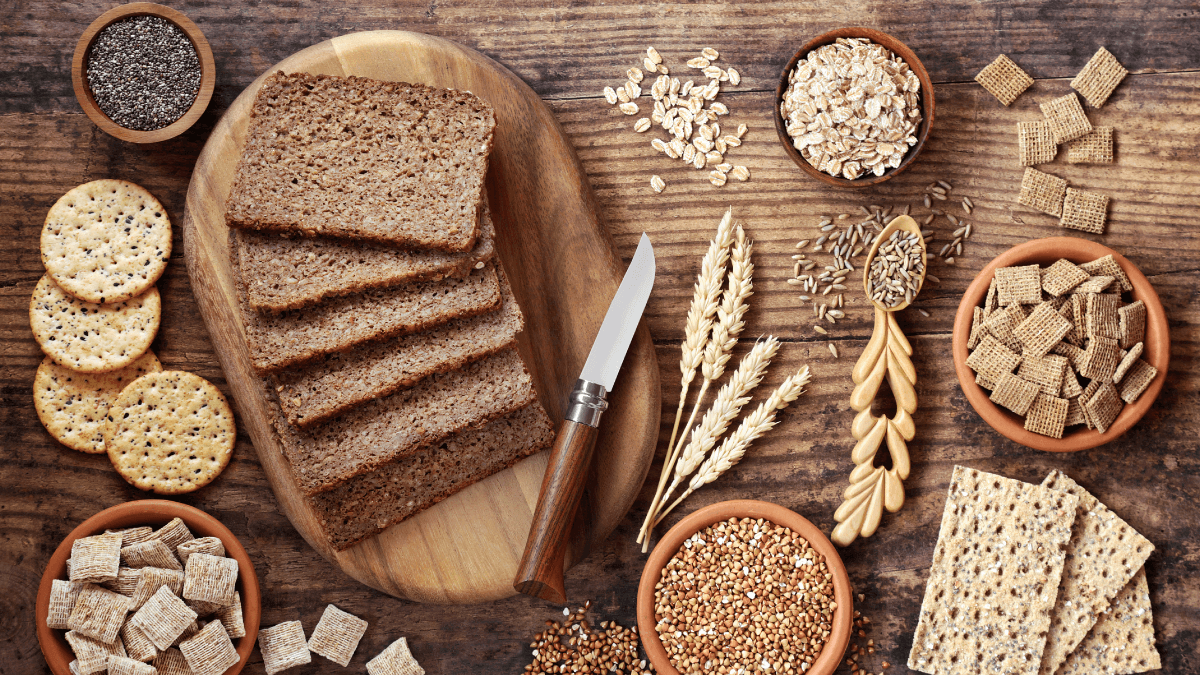
Grain foods, including whole grain varieties, require some degree of processing, such as cleaning, dehulling or milling, to make them safe and edible. These basic steps help remove dust, microbes and other surface contaminants from the outer layers of the grain [3]. Processing of whole grain foods can also enable the full health benefits of whole grains, as it helps to improve the bioavailability of nutrients, including iron, zinc, and magnesium, to name a few. Additionally, a greater amount of processing is common in commercial products to improve sensory qualities, increase accessibility and meet consumer expectations, as traditional whole grain products continue to face limited acceptance in modern diets [4]. This is important as many countries globally do not meet the recommended daily whole grain intake amounts despite their health benefits [5-8].
Ultra-processed food health associations are nuanced for whole grains
A diet low in whole grains is the leading dietary risk factor attributed to global cardiovascular disease-related deaths, and the second leading dietary risk factor for all-cause mortality [9]. Importantly, the health benefits of whole grains extend across all levels of processing. Where ultra-processed foods are linked with poor health, whole grain varieties prevail as health protective. Evidence indicates that whole grain foods considered as 'ultra-processed' do not contribute to associations with poor health but rather remain associated with a 4% risk reduction for type 2 diabetes, 2% for cardiovascular disease, 7% for stroke, and 3% for risk of multimorbidity of cancer and cardiometabolic diseases [10-13]. One explanation may be their superior nutritional quality.
Dietary patterns and nutritional quality of foods, including fortification and consideration of vulnerable populations
It is important to consider food, particularly whole grains, holistically. This includes their nutrient composition, level of processing, and other foods with which they may be consumed. Whole grain foods, even when ultra-processed, contribute important nutrients such as fibre, healthy fats, and are a source of protein, often eaten as part of dietary patterns rich in fruits and vegetables. Processing also presents an opportunity to enhance the nutrient composition of these foods through fortification. In Australia, as one example, the addition of thiamine and folic acid to bread-making flour and iodine to salt used in bread-making is mandatory [14]. Modelling suggests that removing fortified ultra-processed whole grain foods could substantially reduce population intakes of these essential nutrients, leading to adverse health effects for certain population groups [15]. For many vulnerable groups, such as those with limited cooking skills, facilities, time, or financial resources, ultra-processed whole grain foods are important in the provision of safe, affordable, shelf-stable sources of both energy and key nutrients [16].
In summary, a lack of whole grain intake is problematic for health. Their nutritional quality remains of health benefit, even if they are a processed food.
About the author
Elissa Price is a PhD candidate in Health Sciences at the University of New South Wales (UNSW) in Sydney, Australia, nearing the completion of her doctoral research. An Accredited Practising Dietitian, Associate Lecturer in the School of Health Sciences, and Research Assistant, she works across a range of interdisciplinary projects. Elissa’s research explores global primary food sources of whole grains and investigates whether their cardiometabolic benefits depend on their level of processing. She has also examined industry and consumer perceptions of whole grains through qualitative research. A recipient of the UNSW Employability Award, she is passionate about collaborating with researchers worldwide and translating complex data into practical insights that support healthier dietary choices.
References
- Lane, M.M., et al., Ultra-processed food exposure and adverse health outcomes: umbrella review of epidemiological meta-analyses. BMJ, 2024. 384: p. e077310.
- Monteiro, C.A., Cannon, G., Levy, R., Moubarac, J.-C., Jaime, P., Martins, A. P., et al., NOVA. The star shines bright. (Food classification. Public health). World Nutrition, 7(1–3), 28–38., 2016.
- van der Kamp, J.W., et al., The HEALTHGRAIN definition of 'whole grain'. Food Nutr Res, 2014. 58.
- Ross, A.B., et al., Perspective: A Definition for Whole-Grain Food Products-Recommendations from the Healthgrain Forum. Adv Nutr, 2017. 8(4): p. 525-531.
- Grains & Legumes Nutrition Council. Whole Grain Daily Target Intake Statement. 2024; Available from: https://www.glnc.org.au/codeofpractice/whole-grain-daily-target-intake-statement/.
- Bellisle, F., et al., Consumption of whole grains in French children, adolescents and adults. Br J Nutr, 2014. 112(10): p. 1674-84.
- Kyrø, C., et al., Intake of whole grain in Scandinavia: Intake, sources and compliance with new national recommendations. Scandinavian Journal of Public Health, 2012. 40(1): p. 76-84.
- United States Department of Agriculture, Dietary Guidelines for Americans 2020-2025. December 2020.
- Afshin, A., et al., Health effects of dietary risks in 195 countries, 1990–2017: a systematic analysis for the Global Burden of Disease Study 2017. The Lancet, 2019. 393(10184): p. 1958-1972.
- Price, E.J., et al., Excluding whole grain-containing foods from the Nova ultraprocessed food category: a cross-sectional analysis of the impact on associations with cardiometabolic risk measures. Am J Clin Nutr, 2024.
- Price, E.J., et al., Whole-grain modified Nova ultra-processed food definitions: a cross-sectional analysis of the impact on cardiometabolic risk measures when excluding high whole-grain foods from the ultra-processed food category in Australia. British Journal of Nutrition, 2024: p. 1-11.
- Chen, Z., et al., Ultra-Processed Food Consumption and Risk of Type 2 Diabetes: Three Large Prospective U.S. Cohort Studies. Diabetes Care, 2023. 46(7): p. 1335-1344.
- Cordova, R., et al., Consumption of ultra-processed foods and risk of multimorbidity of cancer and cardiometabolic diseases: a multinational cohort study. The Lancet Regional Health – Europe.
- Food Standards Australia New Zealand. Australia New Zealand Food Standards Code – Standard 2.1.1 – Cereal and cereal products. 10th April 2015 11/05/2022]; Available from: https://www.legislation.gov.au/Details/F2015L00420.
- Estell, M.L., et al., Fortification of grain foods and NOVA: the potential for altered nutrient intakes while avoiding ultra-processed foods. European Journal of Nutrition, 2022. 61(2): p. 935-945.
- British Nutrition Foundation. Position statement on UPF. 2024; Available from: https://www.nutrition.org.uk/news/position-statement-on-the-concept-of-ultra-processed-foods-upf/.